

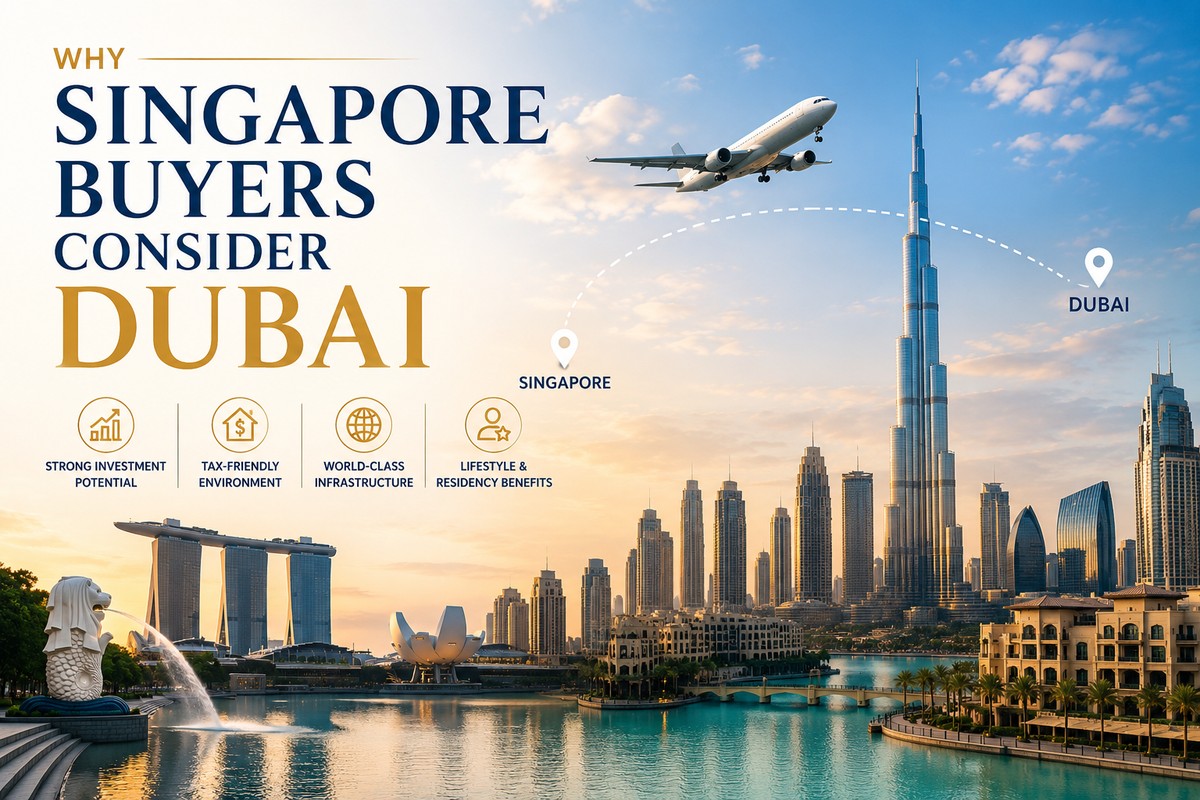
Why Singaporeans Are Considering Dubai Real Estate, Dubai has become an increasingly attractive destination for international property investors, including buyers from Singapore. The combination of a global business environment, modern infrastructure, international connectivity and a broad range of residential and investment properties makes Dubai an interesting option for Singapore-based investors looking to diversify their property portfolio.
For buyers familiar with Singapore's structured property market, Dubai offers a different investment environment with opportunities across apartments, villas, townhouses, penthouses and off-plan developments.
Another advantage is that investors can explore Dubai property without necessarily relocating to the UAE. With professional support and digital processes, much of the buying journey can be managed remotely.
Tax-Friendly Investment Environment
Dubai does not impose an annual property tax on residential property in the same way some international markets do. Property investors should, however, account for transaction charges, service charges, financing costs and other applicable fees.
Singapore buyers should also consider how income and gains from overseas property are treated under Singapore's own tax rules. Professional tax advice is recommended before making a major cross-border investment.
Potential Residency Benefits
Property investment can also provide a pathway to UAE residency for qualifying investors. Under current UAE rules, real-estate investors with property holdings valued at AED 2 million or more may qualify for a 5-year Golden Visa, subject to applicable conditions and documentation.
Strong Infrastructure and Global Connectivity
Dubai is positioned as a major international business and travel hub. With two major international airports, extensive road networks, modern communities, schools, healthcare facilities, shopping destinations and a large expatriate population, the city offers an environment that appeals to both investors and families.
Can Singapore Citizens Buy Property in Dubai?
Yes. Singapore citizens are considered foreign investors in the UAE and can purchase property in Dubai in areas designated for foreign ownership. Dubai Land Department (DLD) manages property registration and related procedures.
Freehold Property
Freehold ownership provides the buyer with registered ownership rights over the property. Foreign investors can purchase eligible freehold properties in designated communities across Dubai.
- Downtown Dubai
- Dubai Marina
- Palm Jumeirah
- Jumeirah Village Circle
- Business Bay
- Dubai Hills Estate
- Dubai Creek Harbour
Leasehold and Long-Term Rights
Some properties may instead be offered under leasehold or other long-term ownership arrangements. Before purchasing, buyers should confirm the ownership structure, remaining lease period where applicable, registration status, developer details, service charges and transfer requirements.
Freehold Property Areas in Dubai
Dubai's communities cater to different investment objectives. The right area depends on budget, rental demand, lifestyle requirements, expected holding period and the type of property being purchased.
Downtown Dubai
Central living, premium apartments — Lifestyle & investment buyers
Business Bay
City living and rental demand — Professionals & investors
Dubai Marina
Waterfront apartments — Investors & end users
Dubai Hills Estate
Family-oriented communities — Families & long-term buyers
Palm Jumeirah
Luxury waterfront residences — Premium & luxury buyers
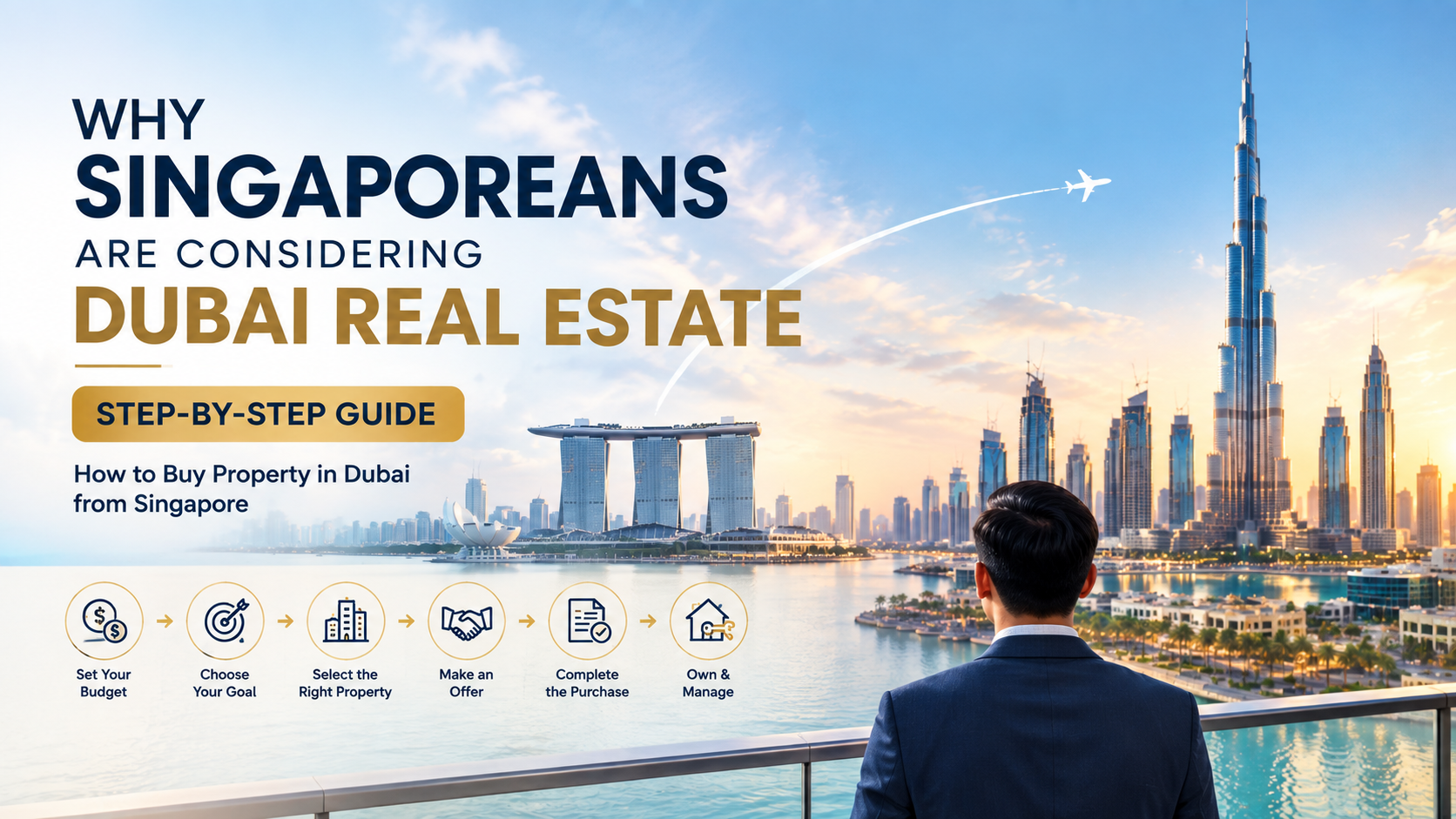
Step-by-Step Process to Buy Property in Dubai from Singapore
Buying property from another country becomes much easier when the process is approached in clear stages.
Step 1 – Establish Your Budget
Decide how much you are comfortable investing. Include the down payment, DLD registration fees, agency fees, mortgage-related costs, developer charges, service charges, property management and currency conversion costs.
Step 2 – Define Your Investment Objective
Determine whether your priority is rental income, long-term appreciation, a holiday home, future residence, a Golden Visa opportunity or portfolio diversification.
Step 3 – Select the Right Community
Compare locations based on rental demand, service charges, accessibility, developer reputation and future development plans.
Step 4 – Work With a Licensed Real Estate Professional
A qualified professional can assist with property selection, market comparisons, negotiation, documentation, purchase agreements and DLD procedures.
Step 5 – Shortlist and Inspect Properties
Review property size, floor, view, building quality, developer reputation, service charges, rental potential, payment plan and completion status. Remote buyers can arrange virtual viewings or an authorised inspection.
Step 6 – Make an Offer and Sign the Agreement
Once commercial terms are agreed, the relevant sale documentation is prepared. For off-plan purchases, the buyer follows the developer's approved payment schedule.
Step 7 – Complete the Transfer and Receive Ownership Documents
The final transfer is completed through the appropriate DLD process. A legal representative may act for the buyer where a valid Power of Attorney is in place.
Step 8 – Set Up the Property After Purchase
Arrange utilities, property management, insurance, leasing, Ejari registration where applicable, furnishing and maintenance.
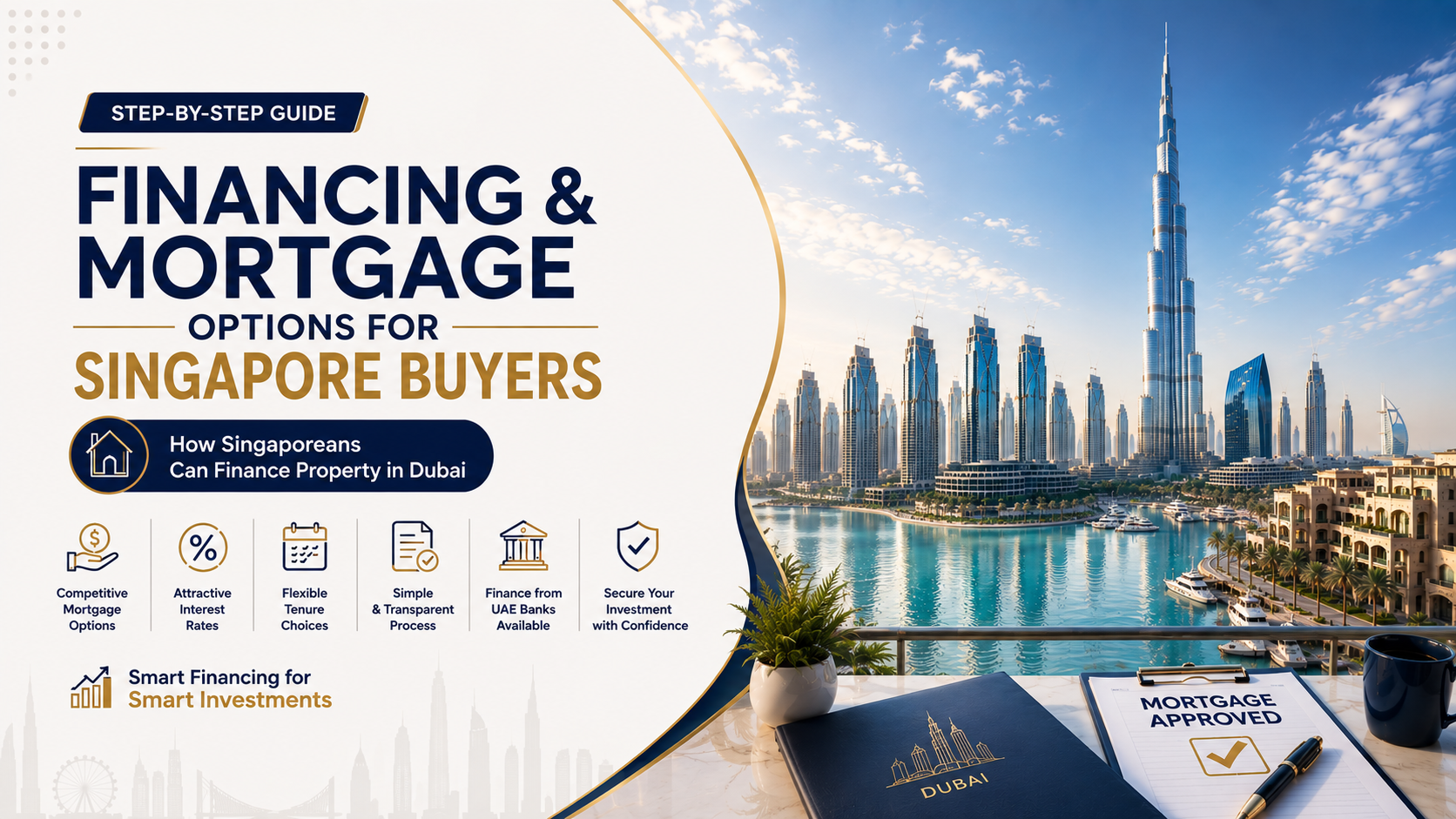
Financing and Mortgage Options for Singapore Buyers
Singapore citizens may be able to obtain property financing in the UAE, although eligibility and loan terms vary between banks and individual applicants. Non-resident applications may be assessed more carefully than resident applications.
What Banks May Consider
- Income and employment status
- Existing financial liabilities
- Credit history
- Property value
- Down payment
- Source of funds
- Country of residence
Documents Commonly Requested
- Passport
- Proof of residential address
- Salary certificate or employment documents
- Bank statements
- Proof of income
- Business documents for self-employed applicants
- Existing loan information
- Property details
Documents Required to Buy Property in Dubai
The exact requirements depend on the property type and transaction structure. Singapore buyers should generally be prepared with identification and financial documents.
- Valid passport
- Proof of address
- Proof of funds
- Bank statements
- Income documentation
- Mortgage approval, if applicable
- Signed purchase documentation
- Power of Attorney, if someone is representing the buyer
Legal and Tax Considerations
Dubai Property Ownership Regulations
Foreign investors can own property in designated freehold areas of Dubai. The Dubai Land Department maintains the official property registration system, and transactions must be registered appropriately.
Dubai Property Taxes and Fees
Dubai does not generally impose an annual residential property tax. Purchasing property, however, involves transaction-related costs. The DLD registration fee is generally 4% of the sale value, subject to applicable rules.
Important: Government fees, bank charges, developer charges and service-provider fees can change. Confirm current amounts before completing a transaction.
Benefits of Buying Property in Dubai from Singapore
Portfolio Diversification
Gain exposure to an international real estate market rather than concentrating all property exposure in one country.
Potential Rental Income
Dubai's large resident and visitor population creates rental opportunities across different communities and property types. Returns are not guaranteed.
International Lifestyle
A Dubai property can potentially serve as an investment, second home, holiday residence or future relocation option.
Residency Opportunity
Qualifying real estate investments of AED 2 million or more may provide access to the UAE real-estate investor Golden Visa route, subject to current requirements.
Globally Connected Market
Dubai attracts residents, businesses and investors from around the world, creating a broad and diverse property market.
Buying Off-Plan vs Ready Property
Ready Property
Inspection: Actual unit can generally be viewed.
Occupancy: Potentially available sooner.
Payment: Often larger upfront requirement.
Rental: Potentially immediate after purchase.
Due Diligence: Inspect building and unit condition.
Off-Plan Property
Inspection: Design/specification and show unit may be used.
Occupancy: Available after completion and handover.
Payment: Developer payment plans may be available.
Rental: Usually after completion and handover.
Due Diligence: Research developer, project and delivery history.
Tips for Buying Property from Overseas
Work With Verified Professionals
Verify the relevant credentials before appointing an agent or adviser.
Don't Focus Only on Purchase Price
Calculate registration, service charges, financing, maintenance, management and furnishing costs.
Compare Multiple Properties
Review price per square foot, rental demand, location, building quality and future development.
Verify the Developer
For off-plan purchases, investigate the developer's track record, project status and contractual structure.
Plan Currency Transfers
Consider exchange rates, transfer charges, processing times and source-of-funds documentation.
Consider a Property Inspection
Visit Dubai where possible, or arrange a professional inspection or authorised representative.
Understand the Contract
Review payment schedules, completion conditions, cancellation provisions, fees and responsibilities before signing.
Estimated Costs of Buying Property in Dubai
The following table is intended as a planning guide. Actual charges vary by transaction, property, lender and service provider.
DLD Registration Fee: Generally 4%
Property sale registration; subject to applicable rules.
Agency Commission: Commonly around 2% + VAT
Depends on agreement.
Trustee / Service Fees: Varies
Depends on transaction value and service.
Developer NOC: Varies
Usually applicable to resale transactions.
Mortgage Registration: Applicable percentage of loan
For financed purchases.
Bank Valuation: Varies by lender
For mortgage transactions.
Bank Processing Fee: Varies by lender
For financed purchases.
Service Charges: Property-specific
Usually paid annually.
Property Management: Varies
Optional for overseas owners.
Utilities / Deposits: Property-specific
Applies after occupancy.
Frequently Asked Questions
Can Singapore citizens buy property in Dubai?
Yes. Singapore citizens can purchase eligible property in Dubai, including freehold property in designated areas for foreign ownership.
Do I need UAE residency to purchase property?
No. UAE residency is not generally required to purchase eligible Dubai property. Residency and property ownership are separate matters.
Can I buy property remotely from Singapore?
In many cases, yes. Parts of the transaction can be handled remotely, and an authorised representative may act under a valid Power of Attorney where applicable.
How much property do I need for a Golden Visa?
Current UAE guidance states that real-estate investors may qualify with property ownership valued at AED 2 million or more, subject to applicable conditions. The real-estate investor Golden Visa is currently listed as a 5-year residence route.
What is the DLD transfer fee?
The standard property sale registration fee is generally 4% of the sale value, although the exact application and payment structure can depend on the transaction.
Can Singaporeans get a mortgage in Dubai?
Potentially, yes. UAE banks offer financing to eligible non-resident buyers, but approval, loan-to-value ratio, interest rate and repayment terms depend on the bank and applicant.
Is buying off-plan safe?
Off-plan property can be suitable, but buyers should conduct due diligence on the developer, project registration, payment structure, escrow arrangements and contractual terms.
How long does it take to buy property in Dubai?
The timeline varies depending on whether the property is ready or off-plan, whether financing is involved and whether all required documents are available.
Final Thoughts
Buying property in Dubai from Singapore is more accessible than many international buyers expect. The key is not simply finding an attractive property; a successful purchase requires careful planning, proper due diligence and a clear understanding of the complete transaction.
Start by defining your investment objective and budget. Then compare communities, evaluate properties, understand the associated costs and work with qualified professionals throughout the process.
For Singapore buyers, Dubai can provide access to a diverse international property market while offering potential rental income, portfolio diversification and, for qualifying investors, a route toward UAE residency.
If you are considering buying property in Dubai from Singapore, Nest Hunters Real Estate can help you understand the market, shortlist suitable properties and navigate the purchase process from Singapore to Dubai.